
Order Flow Explained Simply
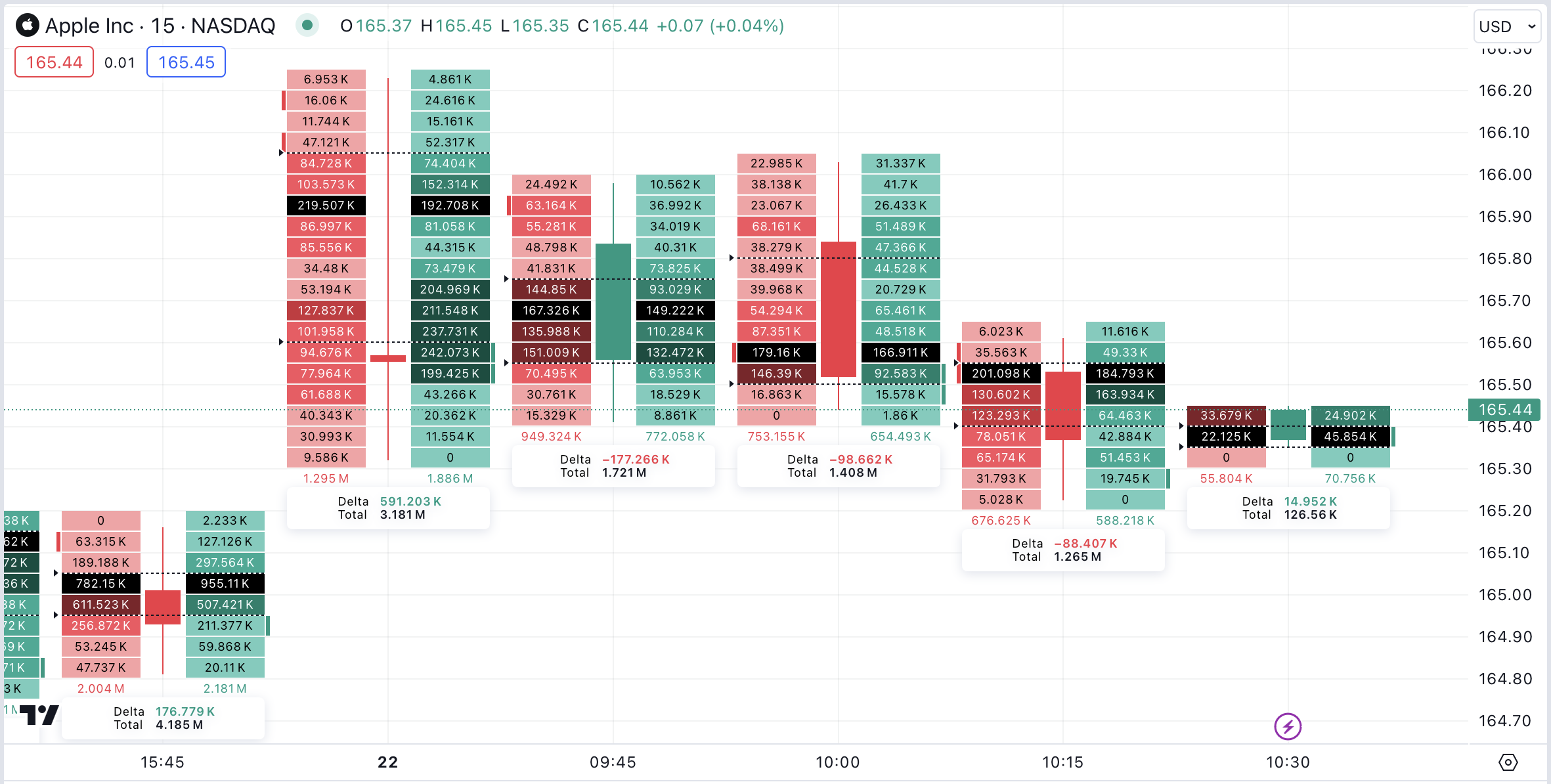
A practical guide to understanding footprint and order flow concepts, absorption, delta, CVD, imbalances, and POC in a cleaner and easier way.
Order flow helps you understand what buyers and sellers are actually doing behind the candle. Instead of relying only on price touching a level, you can watch whether aggression is being accepted, rejected, or absorbed.
The goal of this page is not to give random signals. It is to help you read the story of the market more clearly by combining location, participation, and reaction.
This layout is arranged as a simple learning path so each concept builds on the one before it.
Start With the Point of Interest
Before looking at any order flow signal, start with the point of interest. This is the area where price is most likely to react.
Common POIs
- Support and resistance zones
- Order blocks
- The last candle before a strong rally
- The last candle before a strong drop
- Areas where price previously moved aggressively
Why it comes first
Order flow becomes more meaningful when it appears at an important location. The same signal in the middle of nowhere is much weaker.
- Location first
- Reaction second
- Decision last
Do not read order flow in isolation. Read it where price is supposed to make a decision.
What Absorption Really Means
Absorption happens when one side is aggressive, but price does not move much in that same direction. This often suggests the opposite side is absorbing the pressure with strong limit orders.
Buyers absorbed
- Delta is strongly positive
- Buyers are active and pressing
- But price cannot make a new high
This can suggest sellers are absorbing the buying pressure.
Sellers absorbed
- Delta is strongly negative
- Sellers are active and pressing
- But price cannot make a new low
This can suggest buyers are absorbing the selling pressure.
How Delta Helps You Read Hidden Pressure
Delta compares aggressive buying and aggressive selling. When delta and price do not agree, that difference can reveal hidden strength or weakness.
Example of bullish divergence
- The candle closes red
- But delta is positive
- This can hint that buying is still active underneath
- It may be a clue that sellers are losing control
How to think about it
Delta does not tell the full story by itself. It becomes more useful when combined with location, absorption, imbalances, and closing behavior.
How CVD Helps You Spot Exhaustion
Cumulative Volume Delta (CVD) lets you compare price movement with the ongoing flow of aggressive buyers and sellers. When CVD stops agreeing with price, it can signal fading momentum or exhaustion.
This can suggest buyers are losing force.
This can suggest sellers are absorbing buying attempts.
This can suggest sellers are running out of momentum.
This can suggest hidden buying strength underneath.
Start by learning just two patterns first: bearish divergence at resistance and bullish divergence at support.
How to Read Imbalances More Clearly
An imbalance shows aggressive participation from one side, but the imbalance alone is not enough. What matters is how price behaves around it and whether the move is accepted or rejected.
Bullish imbalance
- Shows aggressive buying
- Ideally, price should close above it
- If price closes weak or back below it, buyers may be absorbed
Bearish imbalance
- Shows aggressive selling
- Ideally, price should close below it
- If price closes back above it, sellers may be absorbed
Why POC Matters in Order Flow
The Point of Control (POC) is the price level where the most volume traded within the bar or structure. It can help you judge whether price is being accepted above or below that level.
When price closes above POC
- It can suggest buyers are holding control
- It shows better acceptance higher
- It can support a bullish continuation idea when confirmed by other factors
When price closes below POC
- It can suggest sellers are holding control
- It shows better acceptance lower
- It can support a bearish continuation idea when confirmed by other factors
POC is most useful when combined with candle strength, imbalances, and delta. It should support the story, not replace it.
How These Concepts Work Together
Order flow works best when you stop treating each concept as separate. The real edge comes from combining them into one clear story.
First find the point of interest where price is likely to react.
Watch whether aggressive activity is actually moving price or getting absorbed.
Use delta and CVD to see whether momentum still supports the move.
Imbalances and POC become more useful when the candle closes in a way that confirms acceptance.
Simple way to think about it
A strong zone gives location, absorption gives a clue, delta and CVD reveal hidden strength or weakness, and imbalances plus POC help confirm whether price is being accepted or rejected.
Simple Beginner Checklist for Reading Order Flow
Use this checklist before making any decision. It helps keep the process simple and avoids forcing random interpretations.
Questions to ask
- Is price at a meaningful point of interest?
- Is one side being absorbed?
- Does delta agree with price, or is there divergence?
- Is CVD confirming the move or showing exhaustion?
- Is the imbalance being accepted or rejected?
- Is price closing above or below POC in a meaningful way?
What to avoid
- Reading order flow with no context
- Treating one signal as enough by itself
- Ignoring the location on the chart
- Forcing a bias before the story is clear
- Entering just because price touched a level
Order flow is not about predicting every move. It is about reading whether buyers or sellers are actually gaining control at important levels.